August 1, 2026
Does Padang's Udang Balado Need a Pool of Palm Oil? A 54-Gram-Protein Indonesian Shrimp for Tonight.
Subscribe
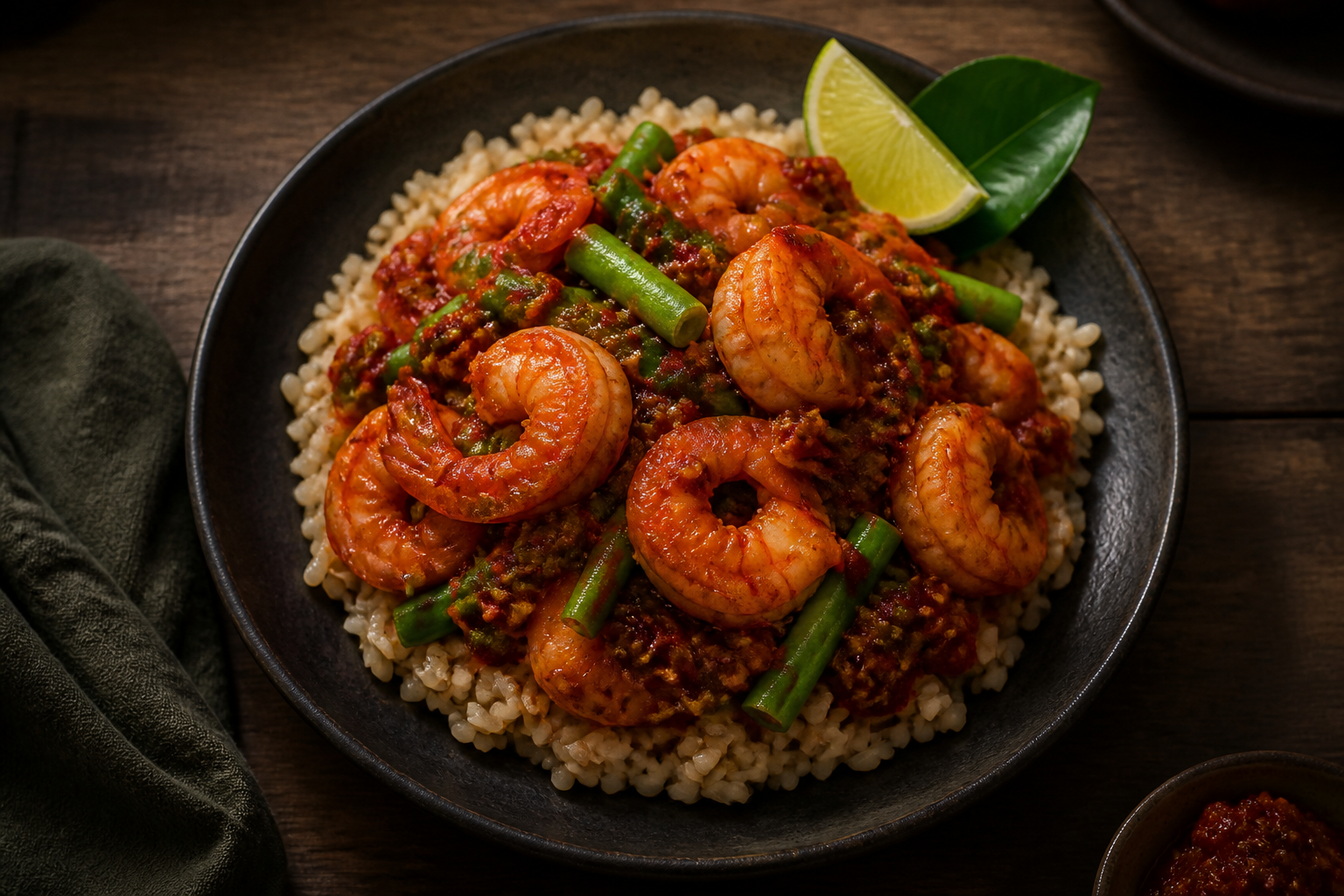
A 30-minute Indonesian plate that takes the chili braise the Minang cooks of West Sumatra build in every Padang rumah makan and rebuilds it lean: eight ounces of peeled shrimp, seared hard in two batches so they char at the edges, then folded through a sambal of toasted terasi (Indonesia's fermented rebon-krill shrimp paste, the umami backbone of the archipelago since before the sixth century) ground with red chili, shallot, garlic, tomato, lemongrass, and galangal, fried in a thin film until the paste turns brick-red and the oil just separates, finished with tamarind and lime, set over brown rice with snake beans folded in, fifty-four grams of protein and about nine grams of fiber for roughly five hundred thirty-five calories, and it eats like a Padang rumah makan, not a diet bowl.
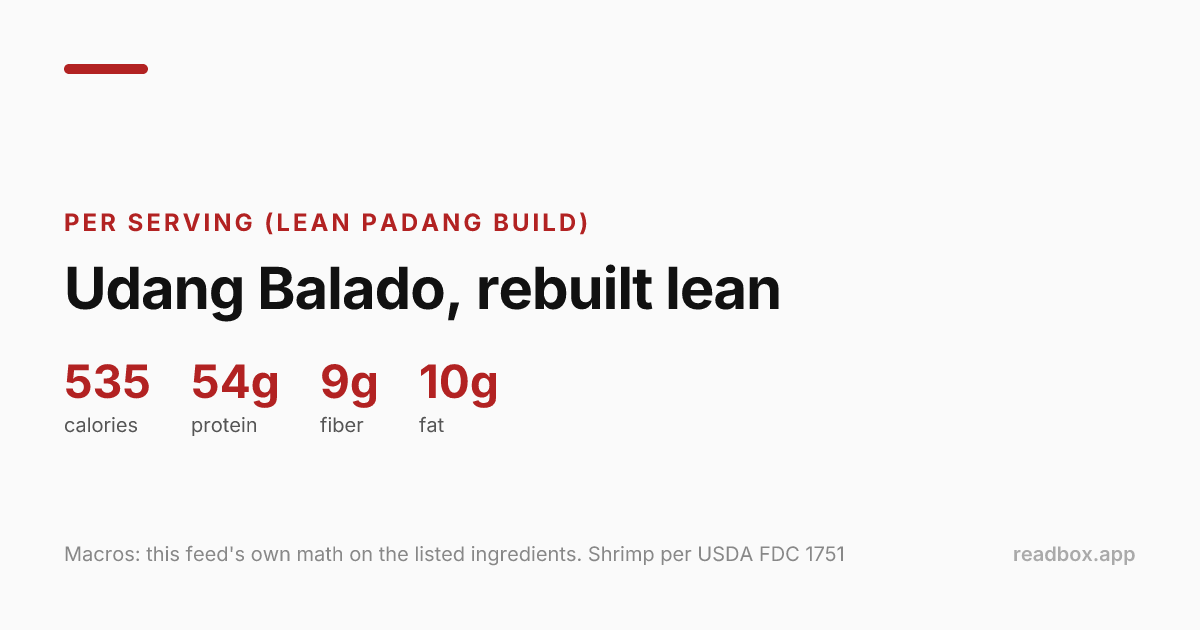
Per serving: about 535 calories, 54 g protein, roughly 62 g carbs (9 g fiber), 10 g fat. Adapted from Chili Pepper Madness and Daily Cooking Quest; the lean two-batch sear, the one-tablespoon oil portion, and all the macro math are this feed's own, with shrimp on USDA FoodData Central 175179 (85 cal, 20.1 g protein, 0.5 g fat per 100 g raw).
Udang balado is the shrimp chapter of the balado family, the hot chili bumbu that the Minangkabau people of West Sumatra turn into a whole roster of dishes, from dendeng (dried beef) to telur (egg) to terong (eggplant) to this one. In the Minang dialect balado literally means "with chili," from ba- (having) + lado (chili pepper), and it is the defining spice move of masakan Padang, the most popular and influential style of Indonesian cooking. The sauce is almost identical to a sambal, with one structural difference: where sambal is a condiment you dip into, balado is stir-fried together with its main ingredient so the chili becomes the dish, not a side (Wikipedia); 196 Flavors).
The honest finding is the same shape that runs through this feed's spice-led plates, with a new umami hero. The depth does not come from the oil. It comes from terasi, the fermented shrimp paste Indonesia makes from rebon, the translucent planktonic krill that swarm the Java Sea. Terasi has been on Java since before the sixth century, recorded in the Sundanese scriptures Carita Purwaka Caruban Nagari (1720) and Mertasinga (1880), and was once valuable enough that the Cirebon kingdom paid it as tribute, then went to war when the tribute stopped (Springer review, 2024; Wikipedia; Surya et al., 2024). Fermentation breaks the krill proteins into free glutamic acid, the same compound that makes soy sauce and Parmesan savory, so a single teaspoon carries the kind of deep, funky umami that otherwise needs a long simmer or a pile of oil. Crucially for the macros, the science review notes terasi is "used in small quantities as a flavor enhancer" and "would not contribute substantially to the daily nutritional requirements," meaning the most powerful ingredient in the pot is nearly free on the calorie ledger. The English explorer William Dampier put it cleanly in 1707: a salted shrimp preparation "with a strong odor, but it renders any foods savory."
So the architecture of a balado is calorie-cheap: chili for heat and the brick-red color, terasi for umami, shallot-garlic-lemongrass-galangal for aroma, tamarind for sour, a little sugar to round it. The calories in a restaurant or Padang rumah makan version come from two places that have nothing to do with flavor. First, the shrimp is often deep-fried before it meets the sambal. Second, the sambal itself is fried in a pool of palm or coconut oil, a cup or more, because frying a big batch of chili paste in lots of fat is the traditional way to coax out the color and keep it from scorching. Home recipes reflect this: one popular version calls for 1 1/4 cups of oil (Nyonya Cooking); a chef version uses 150 g of vegetable oil (Great British Chefs). On a per-serving basis that is hundreds of calories of empty fat before the rice even arrives.
The lean play keeps every flavor and cuts both sinks. Sear the shrimp hard in a dry-hot pan instead of deep-frying, so they char at the edges and stay sweet. Fry the sambal in a single tablespoon of oil, enough to bloom the paste and let it darken to brick-red without scorching. Swap the white rice mound for a measured half-cup of brown rice, and fold snake beans (kacang panjang, the traditional add-in) straight into the sambal for volume and fiber. You keep the umami, the heat, the brick-red gloss, and the sour-salty bite, and you lose the oil bath.
Ingredients (serves 2)
The shrimp
- 1 lb (16 oz / 454 g) raw peeled and deveined shrimp, 8 oz per person (USDA FDC 175179)
- 1 tbsp lime juice, to brine
The sambal (grind to a paste)
- 3 red cayenne chilies (cabe merah keriting), seeded if you want less heat
- 2 bird's eye chilies (cabe rawit), for the Padang knockout (use 1 extra cayenne instead if you want it milder)
- 3 shallots (bawang merah), roughly chopped
- 3 garlic cloves
- 1 medium tomato, roughly chopped
- 1 stalk lemongrass, lower 3 inches only, sliced
- 1 tbsp minced galangal (ginger works)
- 1 tsp terasi (Indonesian shrimp paste); substitute 1 tbsp fish sauce if you can't find it
To cook
- 1 tbsp palm, coconut, or neutral oil (the whole pot, not per step)
- 2 kaffir (makrut) lime leaves, torn
- 1 tbsp tamarind concentrate mixed with 3 tbsp hot water (or 1 tbsp lime juice)
- 1 tsp palm sugar or brown sugar (the whole recipe)
- 1 tsp salt, plus more to taste
- 1 tbsp lime juice, to finish
The base
- 1 cup cooked brown rice (1/2 cup per person)
- 3 cups trimmed snake beans (kacang panjang) or green beans, cut into 2-inch pieces (1.5 cups per person)
How to cook it (about 30 minutes)
-
Toast the terasi. Wrap the teaspoon of shrimp paste in a small foil packet and set it in a dry skillet over medium heat for 2 to 3 minutes, until it smells nutty instead of raw and pungent. This is the move that turns a harsh paste into the savory backbone. (No terasi? Use 1 tbsp fish sauce added with the tamarind instead.)
-
Brine the shrimp. Toss the shrimp with the lime juice and a pinch of salt, let sit 10 minutes, then drain and pat dry. A quick acid-salt brine seasons them through and firms the surface so they sear instead of stew.
-
Grind the sambal. Put the toasted terasi, both chilies, shallots, garlic, tomato, lemongrass, and galangal in a food processor (or a mortar and pestle) and grind to a coarse paste. Scrape down once. It does not need to be perfectly smooth.
-
Fry the sambal to brick-red. Heat the tablespoon of oil in a wide skillet or wok over medium. Add the paste and the torn kaffir lime leaves and fry, stirring, for 5 to 7 minutes, scraping the bottom, until the paste darkens to a deep brick-red and the oil just begins to separate from it and pool at the edges. This is the Minang doneness signal, minyak terpisah, and it is the whole trick: the chili caramelizes, the terasi blooms, the raw smell cooks off (Nyonya Cooking; 3CatsFoodie). If it starts to catch, add a splash of water, never more oil.
-
Sear the shrimp in two batches. Push the sambal to one side of the pan, raise the heat to high, and sear half the shrimp for about 90 seconds per side, just until they curl and char at the edges. Move them to a plate, then sear the second batch the same way. Two batches keep the pan hot so the shrimp sear instead of steaming.
-
Fold and finish. Return all the shrimp to the pan with the sambal, add the snake beans, the tamarind water, palm sugar, and salt, and toss over medium-high for 2 to 3 minutes until the beans are bright and just tender and the shrimp are coated in a glossy brick-red glaze. Kill the heat, stir in the finishing lime juice, and taste for salt and sour.
-
Plate. Mound the brown rice, spoon the shrimp, beans, and sambal over the top, and pour any pan sauce over the rice so it drinks it up.
Make it better
The pro tip is the kecap manis finish. Off the heat, swirl in a teaspoon of kecap manis, Indonesia's thick sweet soy sauce, born on Java in the mid-19th century when Chinese immigrants added palm sugar to soy sauce to suit the Javanese sweet tooth, and now roughly 90 percent of the country's soy sauce production (Serious Eats). A teaspoon costs about 20 calories but gives the shrimp the dark, lacquered, restaurant sheen that a home cook usually chases with more oil, and it tightens the sweet-sour-salty balance in one stroke. It is the single biggest upgrade for the least calories, which is exactly the lean trade this dish is built around.
Batch prep
This is one of the best batch cooks in the rotation. The sambal paste scales cleanly: make a quadruple batch of the ground paste, fry it in oil until brick-red and the oil separates, then cool and freeze it in an ice cube tray. Each cube is a ready balado base for a future weeknight, and frying once in volume is actually more authentic than frying a tiny batch. The finished dish also doubles without thinking, and like most vinegar-and-chili braises it is better the next day, when the shrimp have soaked up the sambal, so cook two nights at once and reheat gently.
That’s the reading for this issue.
- Persian Fesenjan Runs on Toasted Walnuts and Pomegranate Molasses, Not a Pool of Oil. A 46-Gram-Protein Stew for Tonight. Jul 31
- Does Filipino Pork Adobo Need Pork Belly? A 52-Gram-Protein Adobong Baboy for Tonight. Jul 30
- Lomo Saltado Lives on a 90-Second Wok Sear and Aji Amarillo, Not a Pile of Fries. A 52-Gram-Protein Peruvian Stir-Fry for Tonight. Jul 29
- A Moroccan Chicken M'qualli Gets Its Deep Gold From Saffron and Turmeric, Not Olive Oil. A 49-Gram-Protein Tagine for Tonight. Jul 27
Want the next one?
Every new The High-Protein Kitchen issue by email. One tap to unsubscribe.